
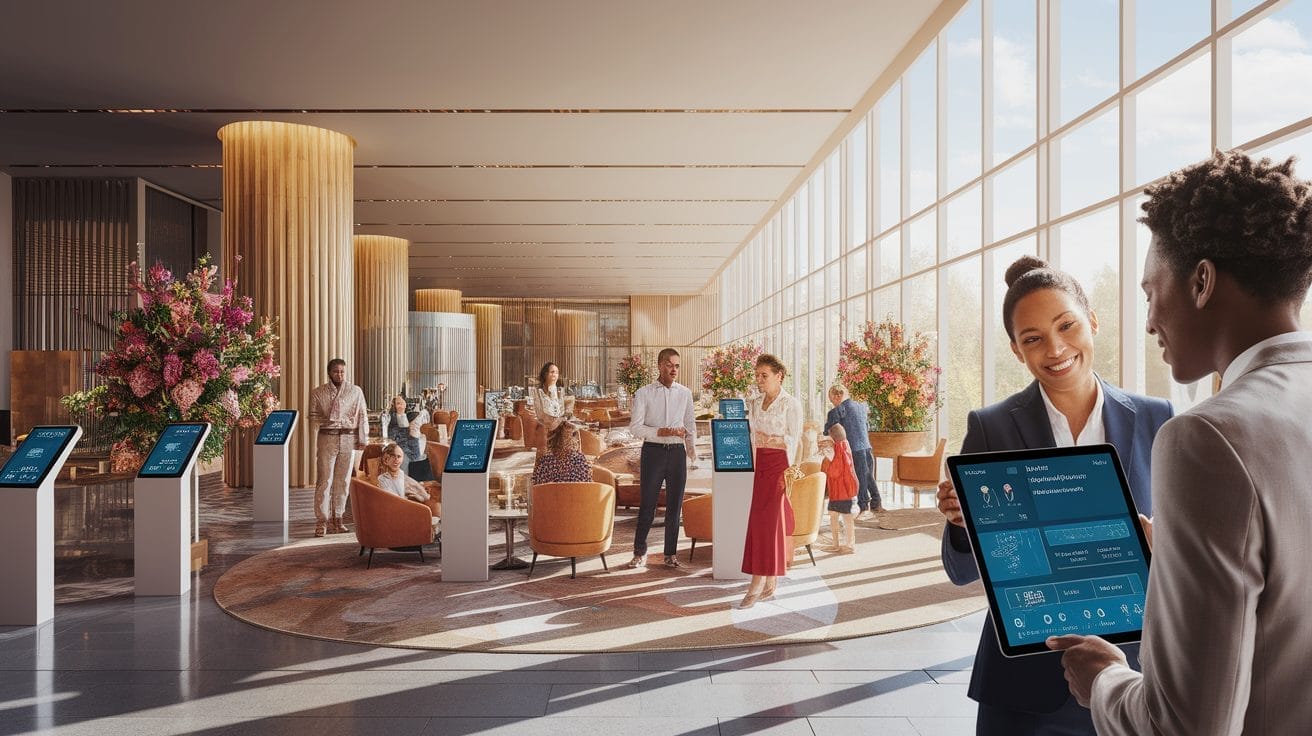
AI Adoption Rates and Predictions
By 2025, 78% of hotel chains will deploy AI technologies, with 89% looking to expand their applications in the following 12-24 months. Chatbots dominate current usage at 42%, while customer data management is set to see a 50% increase in focus. The global market for AI in hospitality is projected to grow from $0.15 billion in 2024 to $0.23 billion in 2025, reflecting a compound annual growth rate of 56.1%, according to The Business Research Company.
Barriers to AI Implementation
Hoteliers cite several obstacles to AI adoption. A lack of AI expertise stifles 62% of efforts, while unclear strategies hinder 51%. Integration challenges impact 45%. Surprisingly, only 6-7% of hotel chains possess a comprehensive AI strategy. Smaller and independent hotels perceive AI as prohibitively expensive, despite advancements in cloud-based, subscription models that have made AI more accessible.
Enhancing Operations with AI
AI applications streamline guest interactions and operational efficiency. Chatbots handle routine inquiries, allowing staff to focus on personalized service. In 2025, 77% of guests will prefer automated messaging for quick communication, and 89% of hotels will use AI for customer service. High-impact applications include personalized booking, upselling, and dynamic pricing, which can reduce housekeeping turnover by 41%.
Impact on Employment
Contrary to fears, AI primarily enhances existing roles rather than replacing them. Over 40% of hoteliers expect full automation in reservations and revenue management within five years. However, 82% of consumers believe technology should enhance the human touch. AI addresses labor shortages by improving efficiency without significant job displacement.
Future Market Trends
Anticipation for AI’s impact is high, with 61% of hoteliers expecting significant changes within a year. A staggering 1,200% increase in consumer AI usage for travel drives this transformation. The US hospitality market is projected to reach $250 billion by 2025, with AI identified as crucial for enhancing personalization and contactless technology.
What Lies Ahead
Over the next 6-12 months, I predict a swift uptick in AI adoption among hotels, particularly as smaller chains realize the affordability of these technologies. The market will likely see increased investment in AI tools that enhance guest experiences, driving efficiency amid ongoing staffing challenges. Those who resist this shift risk obsolescence in an increasingly automated world.


