
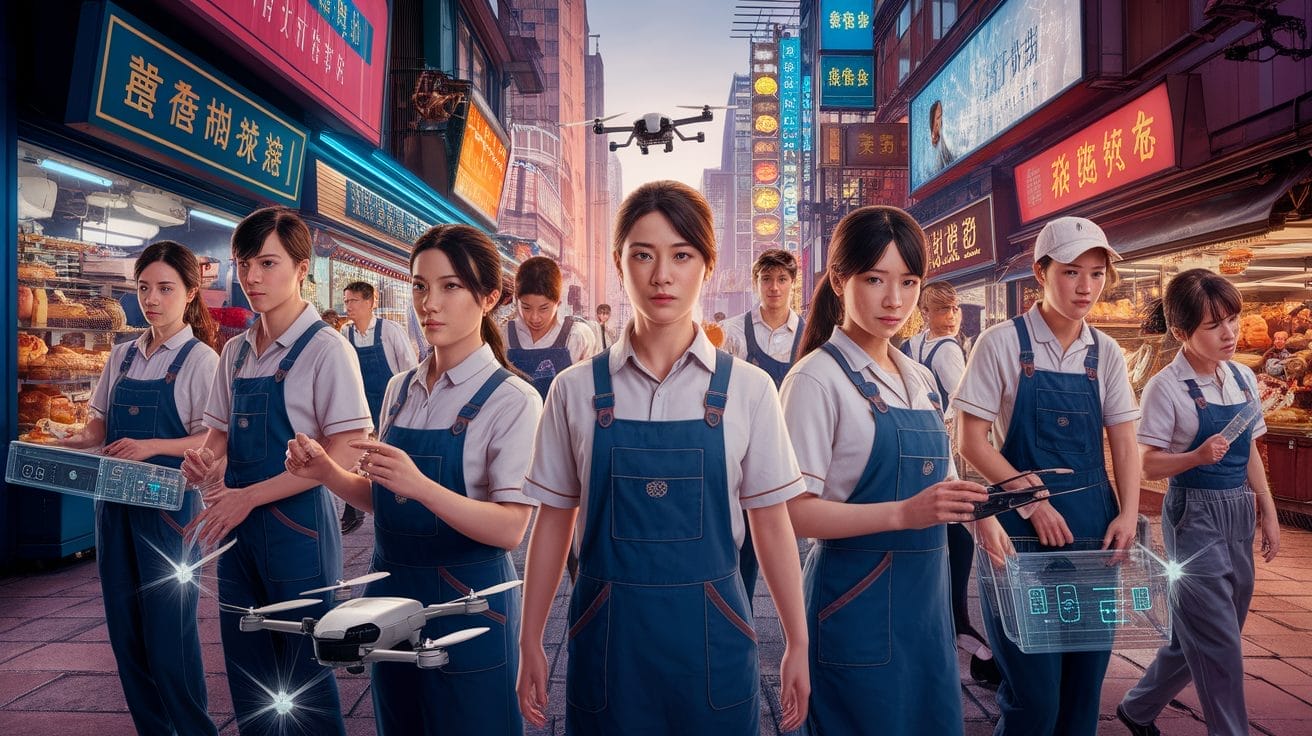
Current AI Landscape in China
China’s national strategy for artificial intelligence (AI) aims for deep integration across sectors by 2027, targeting a penetration rate of 70% for AI entities. The State Council’s “AI Plus” initiative emphasizes broad AI adoption in industry, governance, and daily life. This plan signals a pivot towards enhancing productivity and supply-chain resilience, sidelining concerns about the workforce that underpins these advancements.
Identifying Vulnerable Workers
Vulnerable workers encompass a range of individuals, including rural-urban migrants, low-paid service sector employees, and informal laborers. The shift towards AI-driven automation predominantly impacts those in repetitive, routine roles, such as gig economy workers and mid-skill manufacturing jobs. As firms invest heavily in automation, they reshape task allocation and surveillance, intensifying the precariousness of these roles. Research indicates rising worker unrest, reflecting a brewing crisis among these groups.
Existing Protections and Their Limitations
China’s labor laws, including the Labor Law and Labor Contract Law, provide a framework for worker protections, yet enforcement varies widely. Many vulnerable workers remain outside the reach of these protections due to bureaucratic barriers and enforcement weaknesses. International organizations highlight significant gaps, such as insufficient collective bargaining mechanisms and limited independent unions. Proposed policies for reskilling and vocational training remain largely theoretical, with practical implementation lagging.
Proposals for Worker Protections
Experts advocate for various reforms to enhance protections for vulnerable workers, including:
- Portability of social insurance for migrant and platform workers.
- Expansion of unemployment insurance and active labor-market policies.
- Regulation of algorithmic management to ensure transparency and appeal rights.
- Minimum standards for gig work, including fair pay and formal contracts.
- Implementation of reskilling programs targeted at affected cohorts.
International bodies like the ILO and OECD have outlined strategies for fair transitions amidst automation.
Economic and Political Implications
Integrating worker protections into China’s AI strategy could yield economic benefits, such as greater social stability and reduced unrest. However, this approach also presents challenges for companies prioritizing rapid automation and cost-cutting. The need for fiscal transfers and enhanced enforcement could deter investment and slow down the pace of innovation. Analysts argue that while China’s centralized governance allows for swift policy implementation, the effectiveness hinges on localized execution and balancing innovation with social responsibility.
Looking Ahead
Over the next 6 to 12 months, expect increased scrutiny on government initiatives aimed at worker protections alongside AI expansion. Policymakers will face pressure to address social stability while pushing for technological advancement. The balance struck will significantly shape China’s economic landscape and the future of its workforce.


