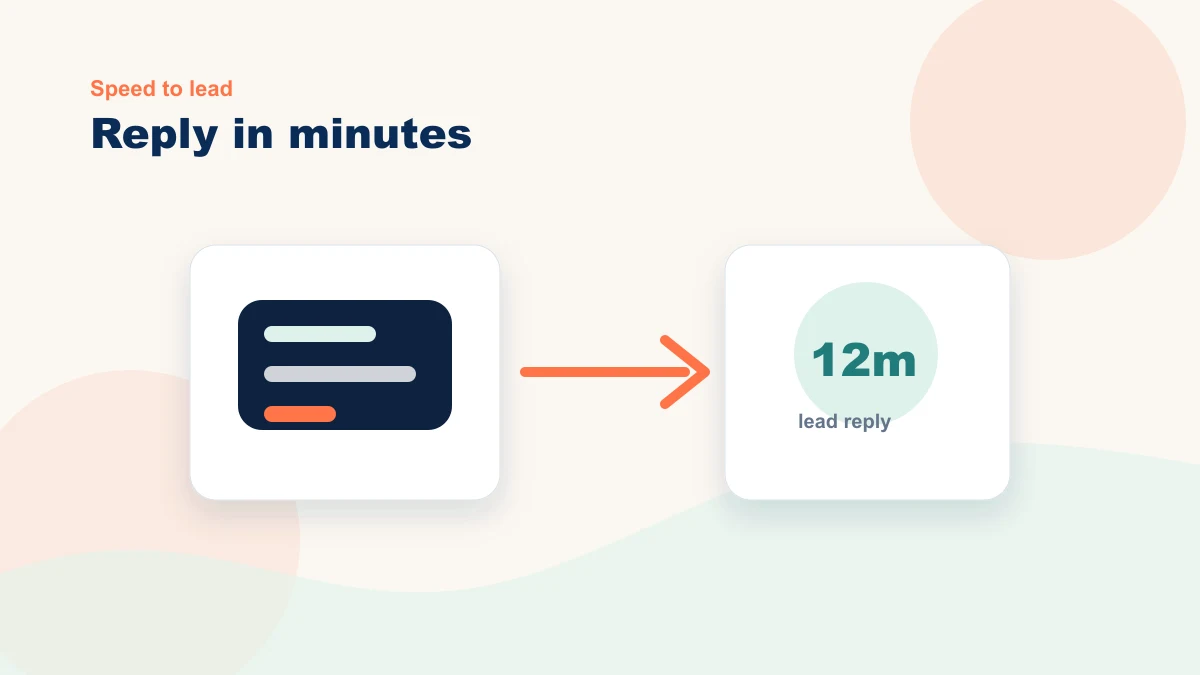
A slow reply can cool an inquiry, but a fast inaccurate promise can damage trust. The goal is not to be first at any cost. It is to shorten the wait for a useful, truthful response.
A small team may not monitor every channel continuously. A practical first change is often structured intake plus a neutral acknowledgement or a prepared reply—not an autonomous system that quotes, qualifies, or promises on its own.
AI can summarize the inquiry and prepare a reply from approved language. A person verifies the facts, fit, timing, and next step. Measure draft time and reviewed send time separately so the workflow does not hide the human handoff.
Why Speed to Lead Actually Matters
Use your own inquiry history as the baseline. Record the median time to acknowledgement, time to a useful reviewed response, qualification outcome, and whether the conversation advanced.
If inquiries wait for hours, map why: notifications, channel sprawl, missing intake fields, blank-page drafting, or unavailable decision-makers. Each cause needs a different fix, and some do not need AI.
AI-assisted replies can reduce blank-page drafting when the inquiry type, source content, and approved language are clear. Review time, corrections, and exceptions still count as part of the workflow.
The Problem With Generic Automation
A generic automated acknowledgement—"Thank you for your inquiry. We will get back to you soon."—does not answer the request or establish a useful next step. If the message cannot be grounded in approved information and reviewed appropriately, keep it neutral and make the real human follow-up explicit.
A useful AI-assisted draft references the actual request, answers only from approved information, asks a relevant question, and sets an expectation the team can meet. A person approves it before the consequential reply is sent.
A neutral acknowledgement should confirm receipt and set an expectation the team can meet. A substantive reply still requires approved information and human ownership.
The goal of a fast first reply isn't to close the deal. It's to say "we're responsive" and "your question matters." That changes how the prospect perceives you. Then the second conversation, when you have time to think and strategize, closes them.
How AI-Assisted Replies Work in Practice
When an email or contact form arrives during other work, the team can respond immediately or let it wait. A bounded AI workflow adds a third option: prepare a relevant draft or neutral acknowledgement from approved information for the responsible person to review.
A well-built AI reply system reads the incoming message and drafts a response that:
- References their specific question or situation (not generic)
- Answers what you can answer immediately
- Asks one clarifying question to move the conversation forward
- Sets an expectation for when they'll hear from you for a real conversation
The reviewer checks the recipient, facts, price or availability language, tone, and next step. Record that review time and the edits required; a fast draft is not useful if it creates slow correction work.
For phone calls, AI can prepare a callback brief from information the lead actually provided. A person checks what is known, what is missing, and which promises are off limits. Test the prompt and template against past inquiries before using the draft on a live call.
Starter Reply Templates to Build First
| Inquiry type | Fast reply should include | Human follow-up |
|---|---|---|
| Pricing question | Acknowledge the service/product, explain what affects price, ask one qualifying question. | Send a quote range or schedule the estimate after details are confirmed. |
| Urgent service request | Confirm urgency, request location and availability, set a callback expectation. | Call or text from the person who can actually dispatch or quote. |
| General information request | Answer the easiest question, link to the right page, and offer the next step. | Check whether the prospect is still researching or ready to talk. |
Where Response Rules Need Extra Care
Urgent trades requests, event availability, real-estate inquiries, professional services, ecommerce complaints, and regulated offers all have different risks. Define what a neutral acknowledgement may say, which questions require a trained person, what data may be used, and how quickly the team can honestly promise a follow-up.
The advantage is not raw speed. It is a shorter, more reliable path from inquiry to the person who can make the right decision.
A Simple Three-Step Setup
You don't need complex workflow software to get started. Here's the minimum:
- Capture inquiries in one place. Email, contact form, phone voicemail notes, SMS. Route them all to a single inbox or folder so you see them together.
- Create 3-5 AI reply templates. One for a general inquiry, one for a pricing question, one for an urgent/emergency situation, one for a reference or recommendation request. Have AI draft these once and reuse them.
- Set a review rhythm the team can keep. Assign an owner, define which replies may use approved language, and measure the actual time from draft to reviewed send.
The basic version may fit inside tools you already use. The hard part is the operating design: approved sources, qualification rules, voice, review ownership, exception routing, and the metric that decides whether the workflow stays.
Before changing anything beyond draft preparation, check whether the upstream lead system is worth accelerating. AI for Lead Follow-Up: Fix the Handoff Before Buying More Traffic shows how to extract explicit fit signals while keeping priority and outreach decisions human.
A Simple Measurement Dashboard
Track a few numbers weekly so you know whether the workflow is helping:
- Median first response time: how long the typical inquiry waits before hearing from you.
- Template usage: how many replies start from the approved AI-assisted templates.
- Reply quality: how often the draft needs heavy editing before it can be sent.
- Qualified conversations: how many inquiries turn into calls, estimates, or checkout progress.
If response time improves but qualified conversations do not, the issue may be offer clarity, lead quality, or personalization, not speed alone.
The Mindset Shift
A first response does not need to answer what the team cannot yet verify. A neutral acknowledgement can confirm receipt and state a next step the business can meet; the substantive reply remains owned by the person who can qualify, quote, schedule, or escalate.
Test acknowledgement and substantive reply as separate handoffs. AI may prepare the latter from approved sources, but a reviewer checks context, fit, promise, consent, and tone before sending. Measure whether the full cycle improves without more corrections or unwanted messages.
A workflow review starts with your current inquiry path. We separate acknowledgement, AI-prepared draft, human decision, reviewed send, and follow-up—then choose one delay and quality metric to test.
For more on building customer-facing AI workflows, see how to test the lead follow-up handoff and our overview of AI implementation for small teams. If you want a second set of eyes, bring the current inquiry path to a free 15-minute bottleneck review. We will map the source, draft, human approval, reviewed send, exception path, and response-time metric.