Your inbox is full of familiar requests. Your calendar keeps collecting status meetings. Your team waits for approvals while you rebuild the same updates, summaries, and follow-ups. The costly part is not that these tasks are difficult. It is that they keep pulling your attention away from work that needs your judgment.
AI can prepare a draft, sort an inbox, summarize notes, or flag an exception. It cannot decide what is true, what a customer should be promised, or what should leave your business without review. A useful workflow makes that handoff explicit before a tool is connected.
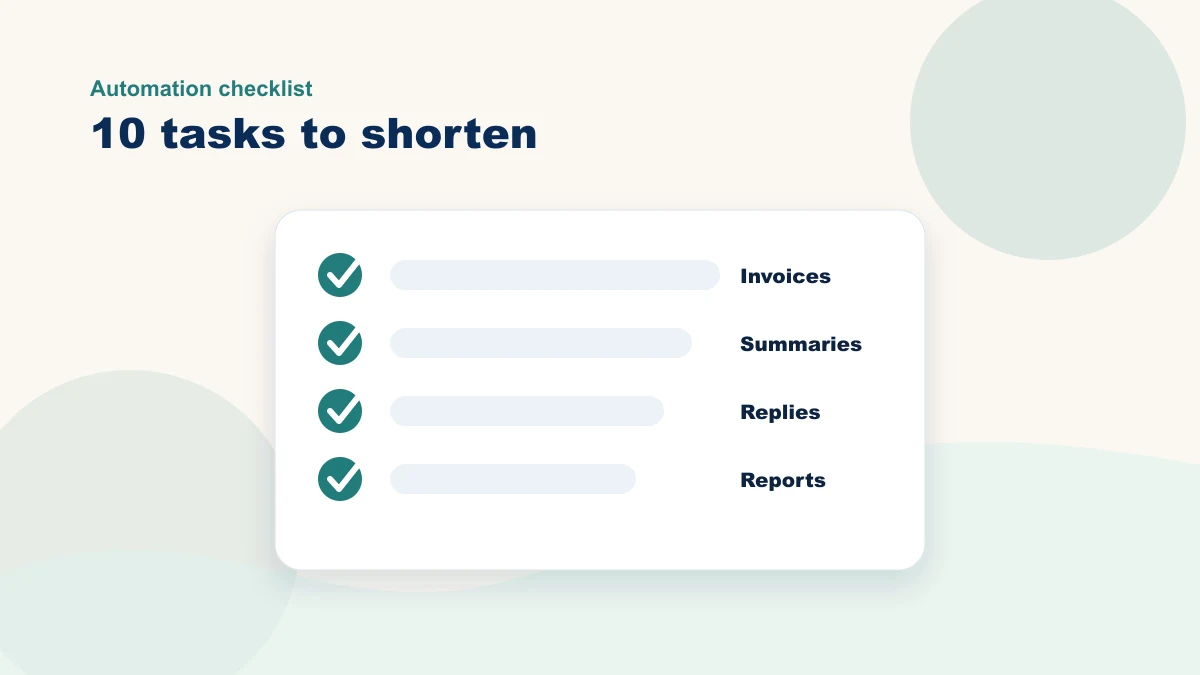
Use the ten tasks below as candidates, not promises. Score each one by how often it repeats, whether the input is reliable, who can review the output, what could go wrong, and which number would show whether the test helped.
Ten repeated tasks to evaluate
- Drafting routine emails. AI can prepare a first pass from an approved template and a short note. You review the facts, promise, tone, and recipient before sending. Track current drafting time, review time, and corrections before you claim a gain.
- Summarizing meetings and calls. With participant permission and an approved transcript, AI can prepare a summary and candidate action items. A participant verifies decisions, owners, dates, omissions, and what may be retained or shared.
- Turning notes into invoice or quote drafts. AI can map approved notes into a controlled template. A qualified person verifies customer, service, scope, quantity, price, exclusions, tax, and terms before use.
- Preparing social media drafts. Give AI approved source material and channel constraints, then review several draft options for facts, voice, permissions, offer, links, and platform fit.
- Cleaning up and organizing spreadsheets. AI can propose consistent columns, categories, and formatting and flag possible duplicates or anomalies. A person verifies the source data and every proposed correction.
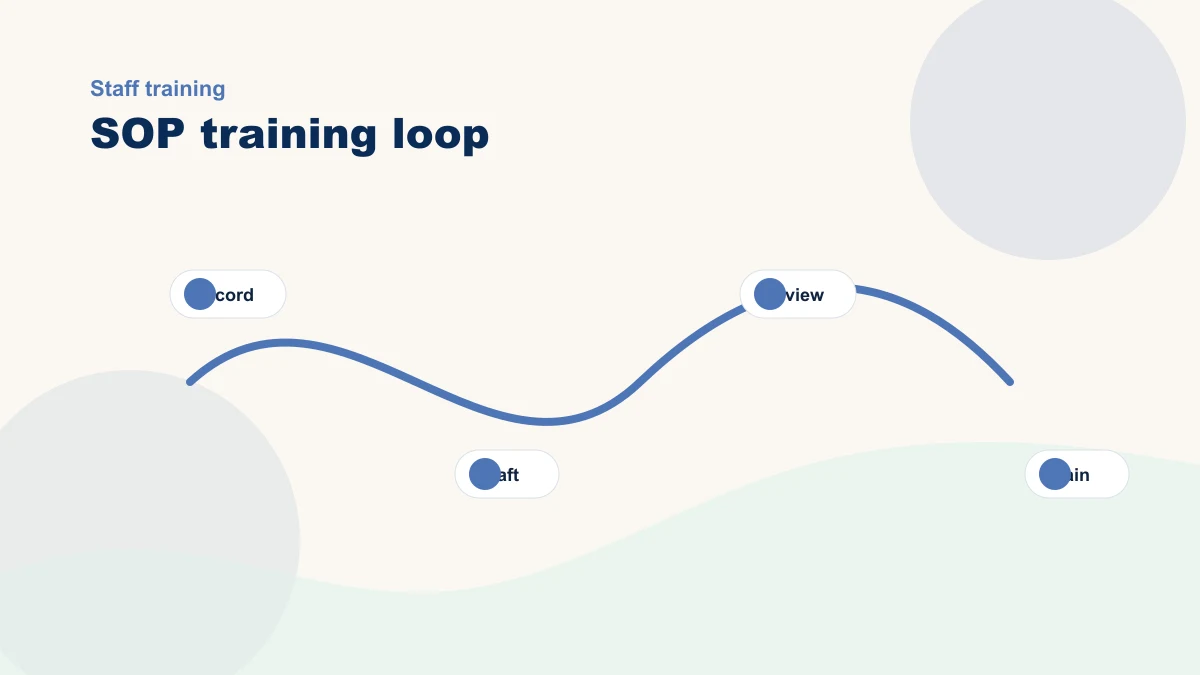
- Drafting SOPs from how-tos. Describe a workflow or transcribe a demonstration, and AI can prepare a numbered SOP draft. The process owner verifies the sequence, exceptions, safety steps, and permissions before the team uses it.
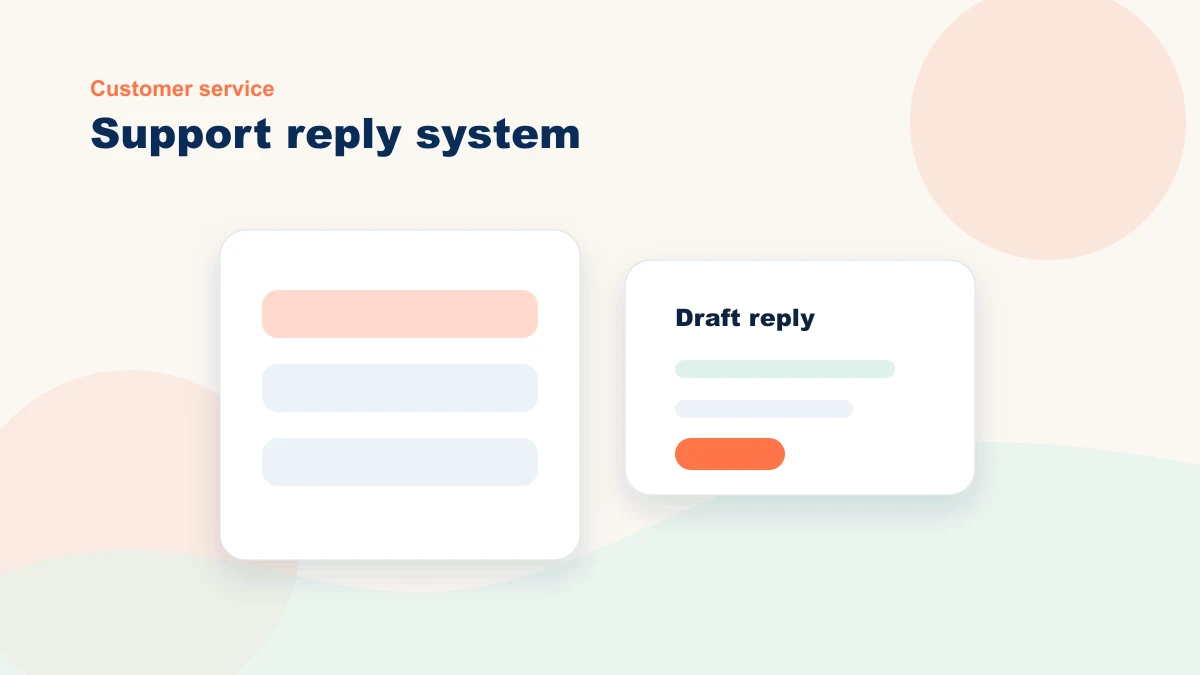
- Triaging FAQs and customer service questions. AI can classify incoming support messages and prepare replies from approved answers. Uncertain, urgent, account-specific, refund, and complaint cases should route to a person.
- Repurposing one piece of content into many. One approved blog post can supply source material for social, email, FAQ, and LinkedIn drafts. One recording can supply a transcript and candidate article or quote drafts, each reviewed before use.
- Writing job descriptions and screening questions. Give AI approved role requirements and voice guidance, and it can prepare a job-description or interview-question draft. A person must check fairness, legal requirements, accessibility, and accuracy; AI should not make hiring decisions.
- Drafting weekly owner reports. Supply approved notes and metrics in a repeatable format. AI may prepare the report; the owner verifies every number, decision, omission, audience, and confidential detail.
| Task family | Candidate first workflow | Deeper guide |
|---|---|---|
| Email and lead follow-up | Draft replies for the three most common inquiry types | Respond to leads faster |
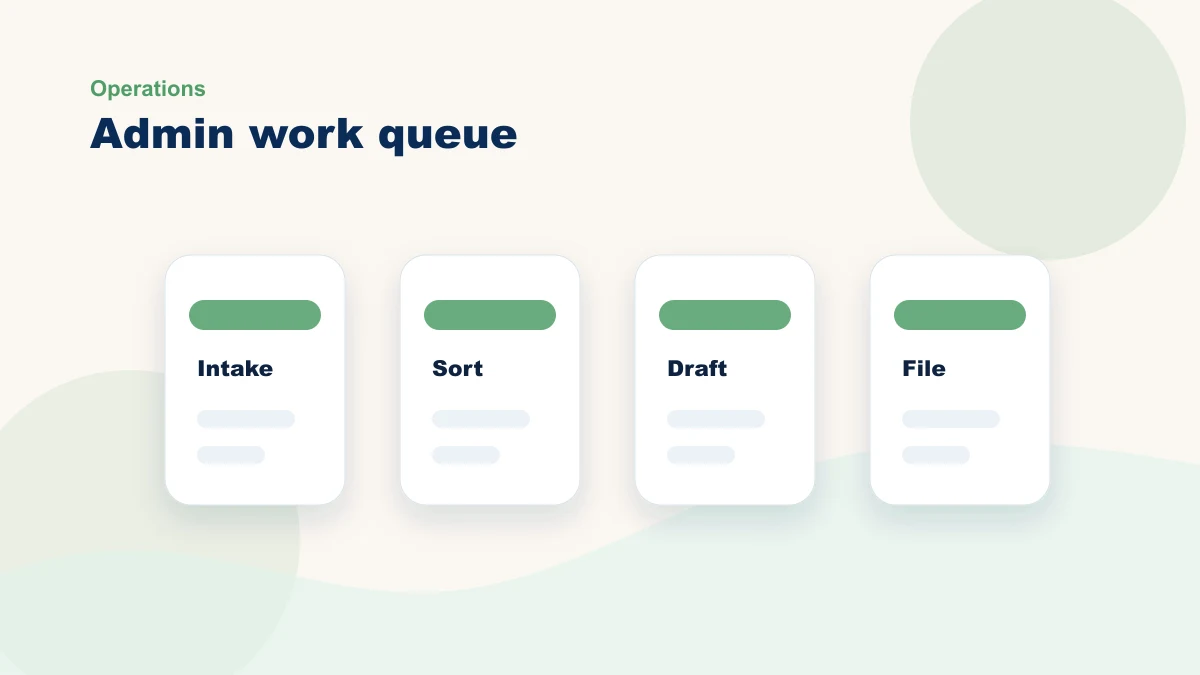
| Admin sorting and reporting | Summarize one inbox, meeting, or weekly report format | Reduce repetitive admin work |
| Customer support | Draft answers to the three support questions you answer every week | Use AI for customer service |
| Process documentation | Turn one owner walkthrough into a short SOP | Write SOPs and train staff |
Why a Promising Task Still Stalls
A promising task stalls when the team starts with a tool instead of the work. Three workflows launch at once, source material is incomplete, nobody owns review, and no baseline was recorded. Generic output is the predictable result.
The setup determines whether the workflow becomes useful: choose one bounded task, supply trusted examples, name the reviewer, record exceptions, and compare the result with the old process. The tool is only one part of that system.
A strong first task is frequent enough to measure, structured enough to prepare, and low-risk enough to keep under human review.
How a Consulting Engagement Works
When we work together, we do not start by buying tools or signing up for subscriptions. We start with your week. We compare repeated tasks by frequency, input quality, review risk, and a measurable outcome. Then we map the smallest supervised workflow worth testing. You get:
- A short audit of your current workload and where AI fits
- Custom prompts and workflows tuned to your business voice
- A simple training session for you and your team
- A 30-day check-in to refine what is working and add the next task
The goal is to test whether the full preparation-and-review cycle removes work without lowering quality. Expand only after the first workflow produces a measured result and the team can handle its exceptions. Local service teams can also compare these tasks with automation ideas built around booking, quoting, and follow-up.
What Still Needs You
Use AI for bounded preparation where the source and output can be inspected. Keep prioritization, truth, relationship context, promises, exceptions, and consequential decisions with a responsible person.
That is your job. You make the call and apply your knowledge. AI prepares bounded typing, formatting, retrieval, or drafting work; it does not replace judgment. The service process makes that handoff explicit: map the source, prepare the repeated step, require human review, and measure the whole cycle.
What the first test must show
Choose one task, record the current time and error rate, and run a supervised test before expanding. The result may be less drafting time, fewer missed steps, or simply evidence that the task is not ready. Use the 30-day framework in AI ROI for Small Business to turn that result into a decision.
The point is not to automate for its own sake. It is to protect time for selling, strategy, relationships, and decisions while keeping responsibility clear. If you want a second set of eyes, bring one repeated task and its baseline to a workflow review.
Ready to compare the repeated tasks in your week? Use the scorecard below to rate frequency, source quality, review risk, and measurability, then bring the strongest candidate to a workflow review if you want a second set of eyes.